Friday, January 17, 2020

I want to know all Neplese opinion about MCC?


Publish on: Friday January 17 2020
                     2:06 
       ___________________________________

I have heard the news that Vladimir Putin is coming to Nepal & Our leaders are ready to sign MCC.

As I am a Citizen of Nepal,it's my duty I have to do this please stay with me.

MCC is the New British East India company. Rs 54 Arab is the price fixed for putting 25 million Nepali life at risk.M should be stopped all over the world.it's a treaty that sold Iraq, Libya & turned it into a Battle field.

Iraq government voted to discard MCC and urged US to take back its troops but the US threatened Iraq to isolate it from world economy. This political agenda MCC ( Millennium challenge cooperation) should not be signed. It’s a treaty that will put millions of Nepali life at stake. It’s an agreement that lets the US open bases in Nepal and conduct mission within its bases which is governed and directed by the US.

Please let us not forget what happened when sher bahadur sold koshi and mahakali to India.That decision was collectively made by our current prime minister KP oil and former prime minister madav kumar nepal. These are the same people that fed us lies about how nepal will rent its energy and how every Nepali will get rich by selling hydro energy. This was a deal that puts 1 million lives at risk when the monsoon hits. India will just let nepal flood and we all watch. A very blunder and childish move made by our politicians

Now fast forward 24 years, history repeats itself and these are the same people that are now signing MCC on behalf of me, you our parents and our kids.

Please I urge every social pages, reporter, law students, journalist, activists and every responsible citizen who knows how toxic MCC could be to us-please it’s my request to everyone educated to educate others about this signing.
please share this not on your wall but to your friends,family and everyone who is unaware of this propaganda. Some old politicians who will die in the next 10 years are taking decisions for us and our kids.

We have a very difficult path to walk to stop this, let us all set an example once and for all that we are Buddha’s nation and will not tolerate any foreign interventions.

#PEACEBEONALLOURLIVES !!
#STOPMCCSIGNING .


______________________________________________
What do you think?
Dear reader, I'd like to hear from you.  I regularly publish letters to the editor on contemporary issues or direct responses to something the Post has recently published. Please send your letters to jiwanmalla45@gmail.com with "Letter to the Editor" in the subject line. Please include your name, location, and a contact address so one of us can reach out to you.
_________________________________________________
           

   jeewanmalla54@gmail.com
   Instagram:_world_,changing
    Twitter.   : jiwanthakuri4
   Pinterest. :jeewan_world

Thursday, January 16, 2020

The MCC muddle


If the Millennium Challenge Cooperation compact is in our interest, why so blatantly lie to get it approved?
____________________________________________________________________________

Biswas Baral

Is the Millennium Challenge Cooperation compact a part of the US Indo-Pacific Strategy? American officials say it certainly is. Our government says it definitely is not. One of them has to be wrong—and it is our government. The grant giver gets to decide how to classify its money. The taker then has the choice of either accepting or rejecting the offer. The Nepal government has adopted a strange position. It cannot say it will accept the MCC, despite it being a part of the IPS, as the electricity and road projects under it are vital for our de  
It is instead saying that the grant givers them­selves don’t know what they are talking about.It is also interesting how the MCC debate has been framed. Even the most ardent opponents of the MCC in the ruling party have no problem with the compact if the Americans clarify that it is not part of the IPS. What is wrong in this prin­cipled position? Isn’t it the Americans who have added to the confusion about the MCC by trying to retrospectively lump it under the IPS? The Nepal government says it will accept the MCC but not the IPS. But what if you can’t separate them?

Again, I am not qualified enough to work out the proj­ect’s economic benefits for Nepal. In fact, the cross-bor­der transmission lines the $500m grant will help build might be in Nepal’s inter­est. All I want is for our government to stop fooling us. The NCP leaders in the government must be under tremendous US pressure to ratify the compact. Those of them outside the government are under less pressure and can voice their concerns—as they rightly have.
The American ambassador says if Nepal rejects the grant, it will go to some other country, and Nepal will lose out. If so, why is the US so insistent that Nepal accept the grant? Why not give it to another needy country and teach Nepal a lesson? But, no, the Americans are putting all kinds of pressure on the government to accept it. This only adds to the suspicion that the MCC, just like the IPS, has an ulterior motive. Yes, there is no mention of any IPS stuff in the MCC documents. But what if the Americans argue tomorrow that the MCC was approved by the Nepali parliament after it was declared a part of the IPS, and hence Nepal ipso facto accepts the IPS?

Either our government is so naïve that it has started believ­ing in free lunches in international relations. Or it has been put under so much pressure it has become impossible to put off the MCC any longer. Whenever we get any assistance in cash or kind from abroad, be it from India, China, or the US, the first question to be asked is: Is it in our national interest? If the MCC is in our interest, why so blatantly lie to get it approved? If it is not, the near two-third Oli government, I am afraid, is a bit of a paper tiger unsuited to dealing with the new geopolitical challenges facing Nepal.
______________________________________________
What do you think?
Dear reader, I'd like to hear from you. We regularly publish letters to the editor on contemporary issues or direct responses to something the Post has recently published. Please send your letters to jiwanmalla45@gmail.com with "Letter to the Editor" in the subject line. Please include your name, location, and a contact address so one of us can reach out to you.
_________________________________________________

           The Annapurna Express

   jeewanmalla54@gmail.com
   Instagram:_world_,changing
    Twitter.   : jiwanthakuri4
   Pinterest. :jeewan_world


Wednesday, January 15, 2020

Hope and despair in Nepal


Thursday, January 16 2020
__________________________

Columns;

 Our country is struggling to cope with rampant corruption, but the emerging youth give some hope for the future.


⏱️ Publish at:  January 16 2020
⏱️ updates at: January 16 2020 8:44 

                       PRAMOD MISHRA


Nepal is in the grip of mafias, middlemen and their patrons and protectors. The go-betweens are desperate to make their living and get rich quick by becoming a conduit between the mafia and their patrons and protectors. The latter in turn need the money to either secure their future post-politics or to fuel money into the middlemen, who in turn rally the benighted voters to go into the polling booths and vote favourably. All this makes a vicious circle for democracy.

The brutal murder of 24-year-old Dilip Kumar Mahato by the sand-and-boulder don Bipin Mahato has brought the issue of mafia-controlled businesses (crusher industry, education industry, land-buying-and-selling business, manpower industry) to the public notice as never before. To be sure, corruption is endemic—from the ward offices and consumer groups to all branches of government.
Those who have any state power anywhere in Nepal can’t believe that clean governance is possible. But it was the service seeker—you—who for the longest time took this state-confined corruption for granted. Once in a while, a Kulman Ghising or Sanduk Ruit came along, and you felt there was still hope for Nepal, hope for its democracy. But for every Kulman Ghising, there are countless corrupt officials. Nepalis took all this for granted.
These mafia dons who ravaged Nepal’s resources were there in the past, in the form of timber smugglers. The timber smugglers were active because the Panchayat Raj at the time brought out policies to clear the forest for transfer of the population from the hills to the plains. The path to ecological hell began to be paved with good nationalistic intentions. Still, the small-time smugglers of the past were not so bold as these republican dons.
The new sectors—of overseas employment, domestic private education and local development, among others—work in the republican framework where people are supposed to be supreme. Instead, the mafia, the middlemen and the party leaders come foremost.
In the current context, who would say that young Nepalis of the plains and the hills shouldn’t migrate abroad for work? In our travels from Jhapa to Kanchanpur, we saw the effect of overseas employment. There isn’t a village that doesn’t have a brick-and-cement structure rising; there isn’t a village that doesn’t have a for-profit private English medium ‘boarding school’ bus ferrying kids, and there isn’t a village whose streets aren’t dug up for gravelling, pitching or canal-making. Naturally, for overseas employment, you must have professional recruitment agencies, called manpower companies. And these companies, by virtue of their connections, or by funnelling a part of their exorbitant earnings into the pockets of their politician patrons, get away with manipulating or breaking laws related to foreign employment. Their notoriety has only recently been surpassed by the education and crusher mafia.
Similarly, who wouldn’t say that there should be an abundance of teaching hospitals that could produce enough medical professionals to staff every health post with qualified doctors and nurses. In India, the tight grip on the number of medical colleges has caused a lot of disappointment, including suicides, among the aspiring young men and women who seek the coveted profession but can’t compete for the limited seats in the colleges. This tight grip of the government on the number of medical colleges had made Shashi Tharoor argue for more flexibility in opening new medical colleges. Yet, in Nepal, the medical mafia manipulates the existing laws for quality control and donations—so much so that Dr Govinda KC had to go on hunger strike more than once to remedy the situation and limit a concentration of subpar colleges in the Kathmandu Valley. Newspapers have also exposed the close nexus between politicians of the highest level and the medical mafia.

In the same vein, who wouldn’t want development? Leaders of the old political parties, such as Prime Minister KP Oli, have been ridiculed numerous times by the media for making grandiose claims about railways, ships and cooking gas pipes. And more than one new party has opened its political account in the name of growth. What does development mean if not building brick-and-cement buildings in the villages and paved roads everywhere? For paved roads and concrete houses, you need bricks, sand, boulders and gravel. And where would they get these if not turning the earth upside down and depleting the hills and rivers?
Rules and laws are only meant for the books, and the politicians need the dough (the Maithili slang for money in many Province 2 districts, by the way, is dheuwa) to raise their own buildings and fight costly elections the political-business nexus expands. For example, in one mayoral election, two losing candidates had spent Rs7 million and Rs15 million, respectively. One can only imagine how much the winning candidate had spent. These politicians want to recuperate the electoral expenditure. One of the losing candidates who told us about his Rs7 million expense sold his land to pay off the election debt. But the winning candidate will do everything possible to get his money back, with interest, so that his political and personal future is secure. And this is an example from the local level; the upper tiers of government are bound to have more expensive electoral campaigns.
Some might see no problem that the unholy nexus between the mafia and the politicians, with the help of the middleman, makes them all rich. But Nepal’s hard-won democracy is at risk here. In the multiparty democracy days of the 1990s, the common people had come to hate the politicians, high and low, for their power-grabbing and corrupt ways. So much so that when Gyanendra Shah took over power, people refused to turn up for the politicians’ meetings. It was Nepal’s civil society, for love of freedom and democracy, that came to the rescue of the feckless politicians.
So, once again, brave people like Dilip Mahato, the first environmental martyr in Nepal, give up their lives for their cause. The fact that he came from and died opposing the crusher mafia in Province 2 tells you the complexity of the province. Even while the federal government under Mr Oli has refused to hand over real power to the provinces, there are young men who are doing remarkable work for their society.
In our travel through the province, Tula Narayan Shah and I met a citizen who had single-handedly mobilised human resources to clean up an ancient pond that had become a garbage dump. We also met a group of engineering students (Dilip Mahato, too, was an engineering student), ages ranging from 17 to 24, who had through their club Arambh (which means beginning) established libraries, held science and art exhibits in various places in their district of Siraha and motivated young kids to become scientists.
The struggle that the club leader Ram Kumar Yadav, an engineering student at Pulchowk campus, had to go through to receive an education and his determination to spread the light among young children in his district was profoundly moving. Such people are the inspiration for Nepal’s future. After meeting such people, one cannot help but be optimistic about Nepal’s future, despite the corrupt politicians and mafias and intermediaries. The country will emerge out of this corrupt phase, and Nepalis will demand accountability and electoral reform one day. For without change, Nepal’s democracy is doomed.
__________________________________________________
What do you think?
Dear reader, I'd like to hear from you. We regularly publish letters to the editor on contemporary issues or direct responses to something the Post has recently published. Please send your letters to jiwanmalla45@gmail.com with "Letter to the Editor" in the subject line. Please include your name, location, and a contact address so one of us can reach out to you.
_________________________________________________


Pramod Mishra
Pramod Mishra is a biweekly columnist for The Kathmandu Post. He is the department chair of English Studies at Lewis University in the United States

(From The Kathmandu Post)


   jeewanmalla54@gmail.com
   Instagram:_world_,changing
    Twitter.   : jiwanthakuri4
   Pinterest. :jeewan_world


Tuesday, January 14, 2020

Nepali Observes Maghe Sankranti


Nepali Observes Maghe Sankranti

Jan. 15, 2019, 3:06 p.m.

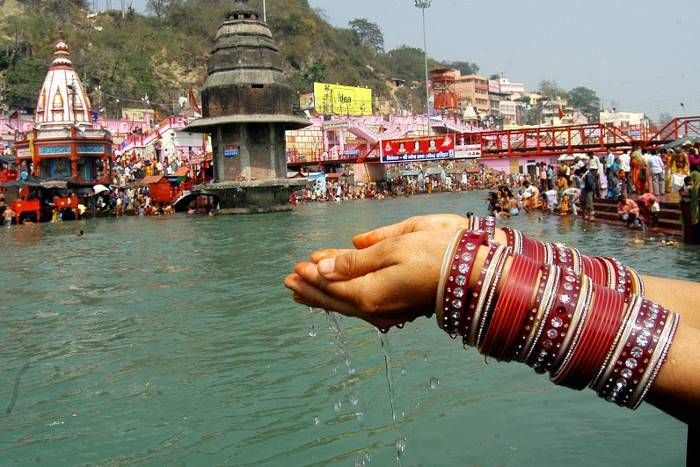
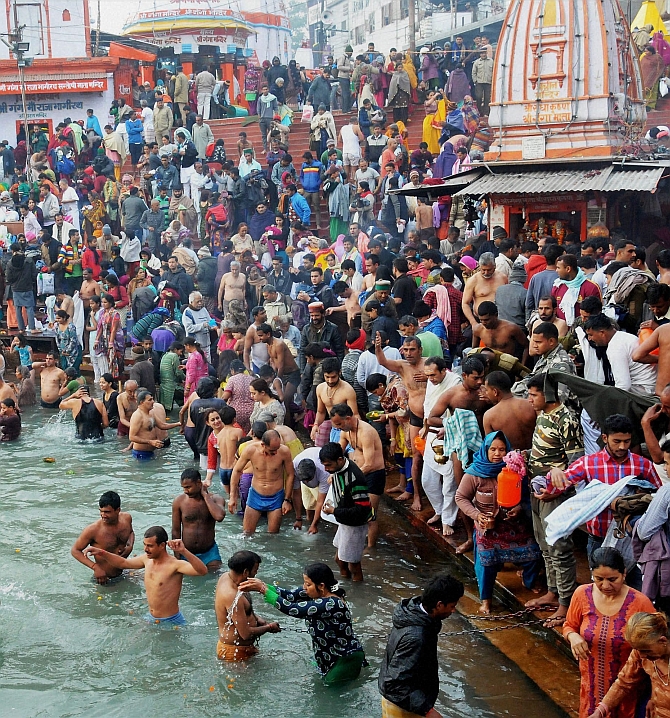
Maghe or Makar Sankranti is being observed throughout the country Tuesday. On the day, people of Hindu communities take holy dips into rivers and ponds, worship at various temples and relish delicacies like ghee, yam, Khichadi and sweets like Chaku and sweets made of sesame and molasses.
As per the astrological chart, this day is called as Makar Sankranti since the sun moves towards the northern hemisphere from this day onwards. On this day, the sun moves from the tropic of Capricorn to tropic of Cancer. Likewise, the days get longer from today onwards.
Maghe Sankranti is celebrated on the first day of Magh. Nepali people celebrate it as the beginning of the auspicious month of Magh. Hindus celebrate this festival by taking ritual dip in holy river confluences, most notably in Devghat, Chitwan. Families get together during the day and eat meals together. Sesame seed laddus, molasses, ghee, sweet potatoes and yam are included in the menu. People worship Lord Vishnu during the month by offering him pujas and reading the sacred Bhagwad Gita, also known as The Song of the Gods.


The first day of Magh is also celebrated in the Terai by the Tharu community as Maghi or New Year. It is a weeklong festival celebrated by getting together as a family and friends, attending community get together or mela, dressing up in the traditional Tharu wear, eating, drinking and making merry.
The festival is a harbinger of longer and relatively warmer days in comparison to the cold month of Poush. On this day, the sun is believed to start moving toward the Northern Hemisphere. In that sense, Maghe Sankranti is similar to solstice festivals in other religious traditions.
A large number of devotees throng Devghat, Trishuli, Kaligandaki, Bagmati, Indrawati, Ridi, and other places on the river banks to take a holy bath and perform Shraddha.
Chairman of Nepal Calendar Determination Committee Prof Dr Ram Chandra Gautam told RSS that the time from Shrwan Sankranti to Maghe Sankranti is called Uttarayan since the sun moves towards the north.
"This period is considered the best one for holy bath, offerings, religious trips and fasting," he added.
On this day, a festival is organised at the Tilmadhav Narayan Temple at Taumadhi Tol, Bhaktapur and Puja of Deepakankar Buddha is performed. The Tharu Community observes this festival as the Maghi with much fanfare and gaiety for five consecutive days.
Likewise, the people in the Tarai belt mark this day as the festival of bath known as Nahan. It is also celebrated by the Tharus as Maghi or the New Year with much funfare.

WE ALL NEPALI🇳🇵
__________________

jeewanmalla54@gmail.com
Instagram:._world_changing
Twitter.    : Jiwanthakuri4
Pinterest: jeewan_world

Happy Makar Sankranti 2020: History, Importance & Rituals of the Festival

Trending desk
_______________

Updates: 15 January 2020 7:45 am IST
________________________


Makar Sankranti is considered to be one of the most auspicious festivals in the Hindu tradition. Makar Sankranti is celebrated when Surya (Sun) transitions into Makar (Capricorn). In North India, & Nepal people make Khichdi, sesame and jaggery ladoos and worship the Lord of fire.


Makar Sankranti also known as Makara Sankranti is celebrated in various parts of the Indian & Nepal subcontinent to observe the day which marks the shift of the sun into ever-lengthening days.


The festival is a seasonal observance as well as a religious celebration.

Though extremely popular as Makar Sankranti, the festival is predominantly a harvest festival and is celebrated throughout India, from north to south and east to west.


While Makar Sankranti is most popular in West India, down south, the festival is known as Pongal and in the north, it is celebrated as Lohri. Uttarayan, Maghi, Khichdi are some other names of the same festival. 


Makar Sankranti is the festival of til-gul where sesame and jaggery laddoos or chikkis are distributed among all.


The festival Makara Sankranthi is a solar event making it one of the few Hindu festivals which fall on the same date in local calendars every year: 14 January, with some exceptions when the festival is celebrated on 15 January. 


Makar Sankranti is believed to be a time for peace and prosperity. 


The day is regarded as important for spiritual practices and accordingly people take a holy dip in rivers, especially Ganga, Yamuna, Godavari, Krishna and Cauvery.


Makar or Makara Sankranti is celebrated in many parts of South Asia with some regional variations.


It is known by different names and celebrated with different customs in different parts of the region.


The festival is one of bonding where every member of society is asked to bury the hatchet with enemies and foes and live in peace.


Makar Sankranti generally marks the beginning of the Kumbh Mela in Uttar Pradesh while in South India, in Kerala, one of the most austere and difficult pilgrimages of Shabrimala ends on this auspicious day.


Other parts of the country too, celebrate by taking a dip in the holy rivers flowing through states to cleanse themselves of sins.


It is also believed that if you die during Makar Sankranti, you are not reborn but go directly to heaven.


_______________________________________________________________
-- Hope this Makar Sankranti connects you to the brightest of moments. And may you reach new heights just as the kites do on this auspicious occasion adding charm to your celebration. Happy Makar Sankranti!
          _____________________________________

CREDIT: NEWS 18 (ENGLISH NEWS)

jeewanmalla54@gmail.com
INSTAGRAM:_WORLD_CHANGING
TWITTER.   : JIWANTHAKURI4
PINTEREST : JEEWAN_WORLD


Monday, January 13, 2020

Tourist arrival's dropped slightly in 2019


Published: January 13, 2020 3:34 pm On: Business
__________________________________________________

Himalayan News service

Kathmandu January 12
_______________________


The number of tourist arrivals in 2019 declined slightly compared to the arrivals in 2018. As per the data compiled by the Department of Immigration (DoI), a total of 1.17 million tourists visited Nepal in 2019 via air and land route while in 2018 a total of 1.52 million tourists had visited Nepal.


Like in every year, in 2019 too, Nepal welcomed the highest number of tourists from India. According to DoI, a total of 209,611 Indian tourists visited Nepal while 169,543 Chinese tourists visited Nepal in 2019. Meanwhile, the United States stood at the third position as 93,196 tourists visited the country. Likewise, 61,139 tourists from United Kingdom and 55,869 tourists from Sri Lanka visited Nepal.
Among the top five countries to visit Nepal, the number of tourists from the UK and Sri Lanka declined in 2019. As per DoI, 63,086 travellers from the UK and 70,610 tourists from Sri Lanka visited Nepal last year. Likewise, the number of Thai tourists also declined from 53,250 in 2018 to 41,653 in 2019.
Similarly, the number of tourists visiting Nepal from France, South Korea and Spain also declined to 30,644, 29,679 and 19,057, respectively in 2019 compared with 31,653, 37,142 and 20,210, respectively in 2018.
Tourist arrivals in 2019 declined even during the peak tourist season. As per the data compiled by DoI, the number of tourists visiting Nepal was 130,745 in October of 2018 while during the same period in 2019 only 123,267 tourists visited the country. Likewise, in November last year 147,859 tourists had visited Nepal while in the same period of 2019 only 98,548 tourists visited the country.
According to Nepal Tourism Board, flight obstruction due to the rehabilitation works at Tribhuvan International Airport and the halt in flight operations by a few international airline companies hit the tourist arrival figure last year. Meanwhile, the Civil Aviation Authority of Nepal said that the number of international passengers coming to the country via the air route in 2019 declined to 3.7 million from 4.3 million in 2018.

A version of this article appears in print on 13 Jan, 2020 of The Himalayan Times- (NEPAL NO. 1 ENGLISH NEWS PAPER)

  jeewanmalla54@gmail.com
JIWAN MALLA
INSTAGRAM: _world_changing
TWITTER.    : Jiwanthakuri4
PINTEREST : jeewan_worlx

Xiaomi teases the MIUI 12, could arrive later this year

Xiaomi has just recently teased MIUI 12, its upcoming latest custom Android version, i.e. successor to its MIUI 11.  The news was leaked through the MIUI 12 skin logo on Weibo. However, there are no other announcements about it.
Xiaomi’s MIUI 11 got announced last September with the global stable ROM dispersing out in October. Based on this, we can speculate that the MIUI 12 will make its appearance around the same time this year.
Xiaomi introduced a system-wide dark mode, an improved always-on display experience, and Mi Lan Pro system font with MIUI 11. Moreover, it featured new animations, wallpapers, and themes, as well as Mi Go, a travel suite that allows users to book tickets for different travel modes.
The final release is still a far way to go and it’s yet to know the updates and upgrades in MIUI 12 over its predecessor. Until then, we’ll keep you updated with every new news.

     Jiwan Malla
jeewanmalla54@gmail.com
Instagram:_world_changing
Twitter:.     Jiwanthakuri4


Unprecedented data confirms that Antarctica’s most dangerous glacier is melting from below

Climate & Environment Researchers needed to drill through nearly 2,000 feet of ice to measure water temperatures where the Thwaite...